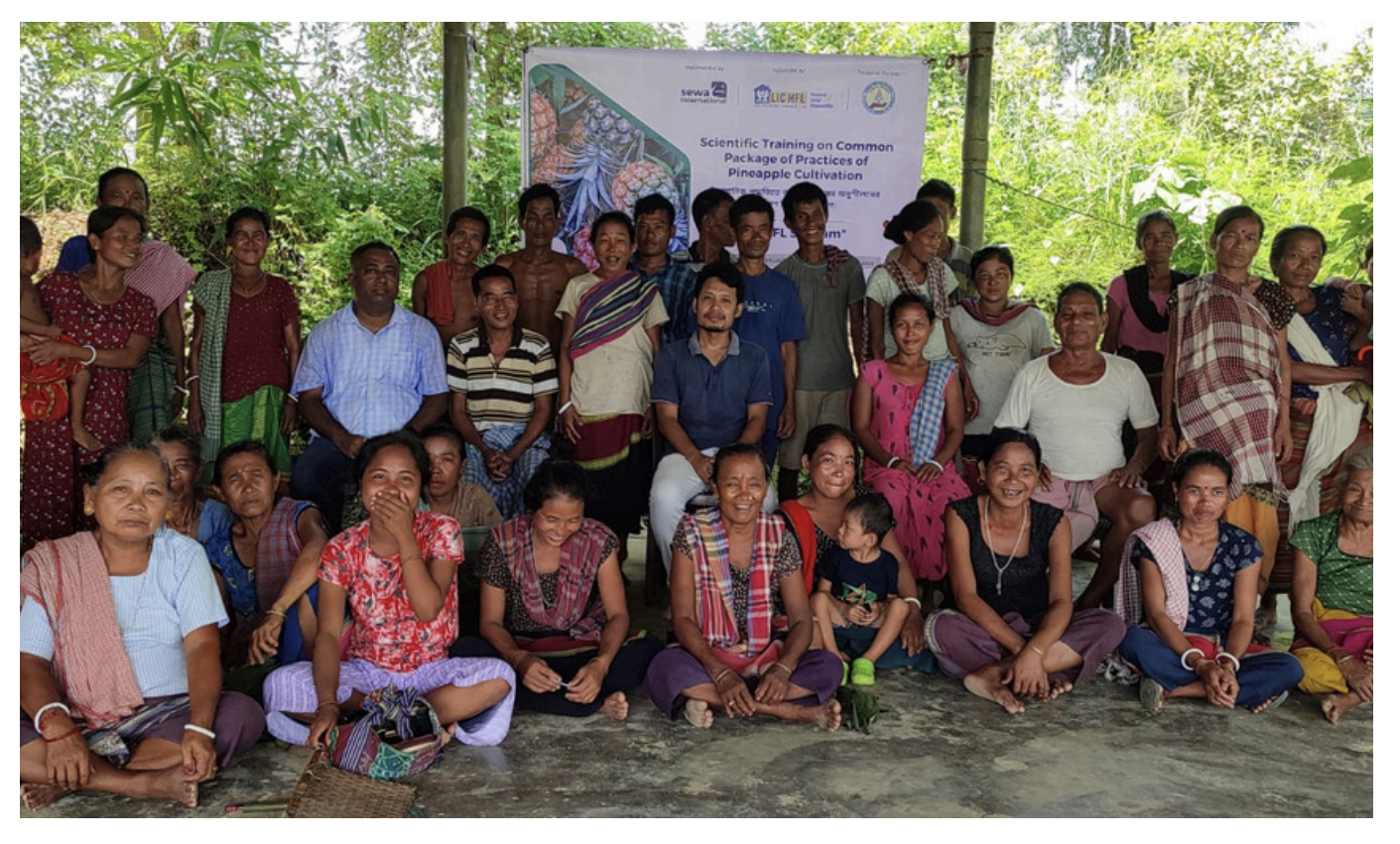
Pineapple Cultivation Livelihood Program
Empowering Farmers. Strengthening Livelihoods. Building Sustainable Communities.
Agriculture is more than a source of income — it is the foundation of rural livelihoods and community well-being.
Recognizing the immense potential of pineapple cultivation in the North-East, Sewa International launched the Pineapple Cultivation Livelihood Program to empower small and marginal farmers through scientific farming practices, value addition, collective marketing, and sustainable livelihood opportunities.
The program focuses on enhancing agricultural productivity, increasing farmers’ incomes, strengthening community institutions, and creating long-term economic resilience. By combining technical knowledge, community participation, and market access, the initiative enables farming families to move towards self-reliance and sustainable development.
About the Program
The Pineapple Cultivation Livelihood Program is designed to improve the socio-economic conditions of pineapple-growing communities by providing comprehensive support across the agricultural value chain.
The initiative emphasizes
- Scientific cultivation techniques
- Capacity building and skill development
- Formation of Farmer Producer Groups (FPGs)
- Access to quality planting materials
- Sustainable farming practices
- Market linkages
- Value addition and processing
- Community ownership and long-term sustainability
Our objective is not only to improve crop productivity but also to create sustainable livelihood opportunities that benefit entire farming communities.
Program Objectives
The program works toward nine clear objectives.
- 01
Improve the productivity and quality of pineapple cultivation
- 02
Increase the income of small and marginal farmers
- 03
Promote sustainable and climate-resilient agricultural practices
- 04
Strengthen farmer collectives through Producer Groups
- 05
Reduce post-harvest losses
- 06
Establish value-addition opportunities
- 07
Improve access to markets and institutional buyers
- 08
Empower women farmers through leadership and entrepreneurship
- 09
Build self-reliant farming communities
Capacity Building
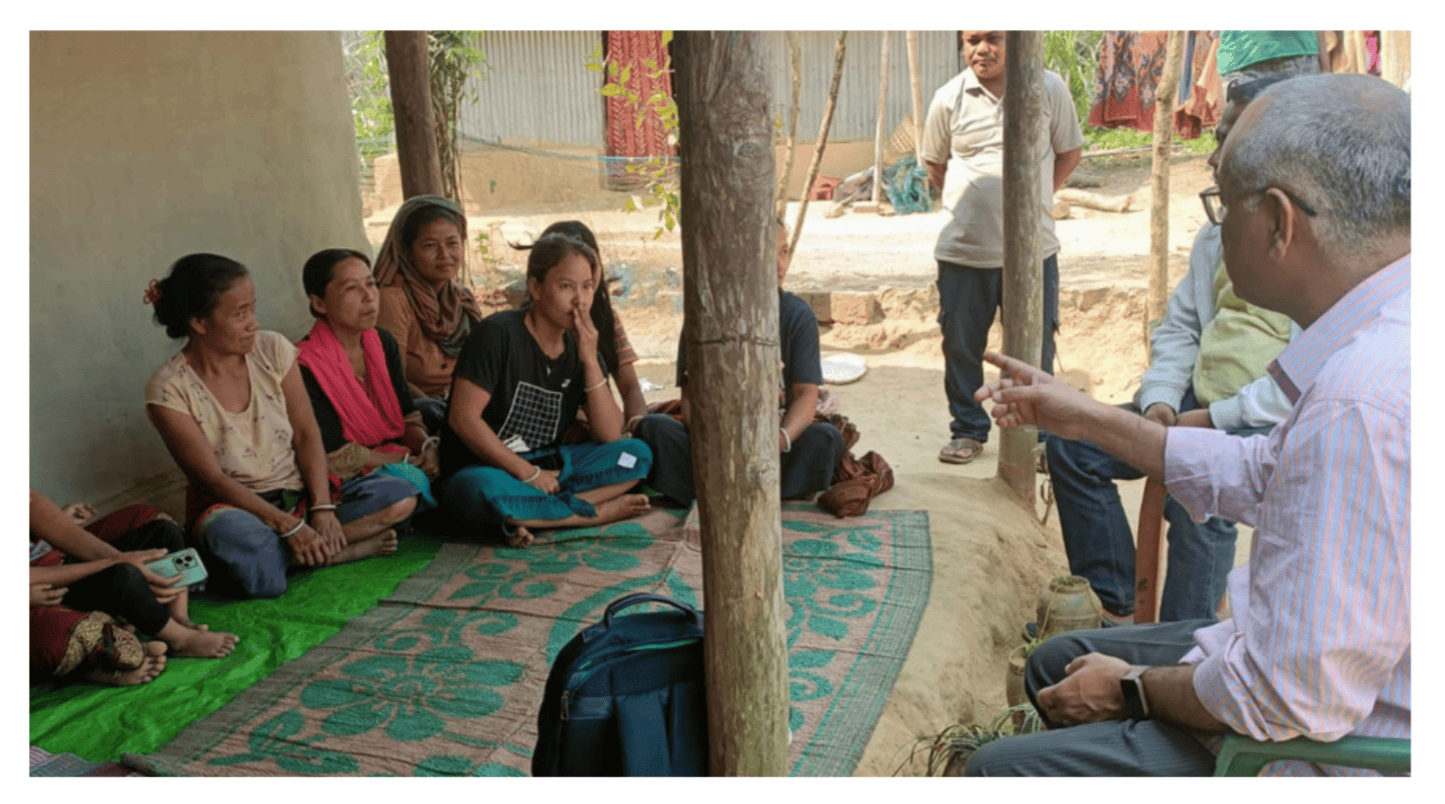
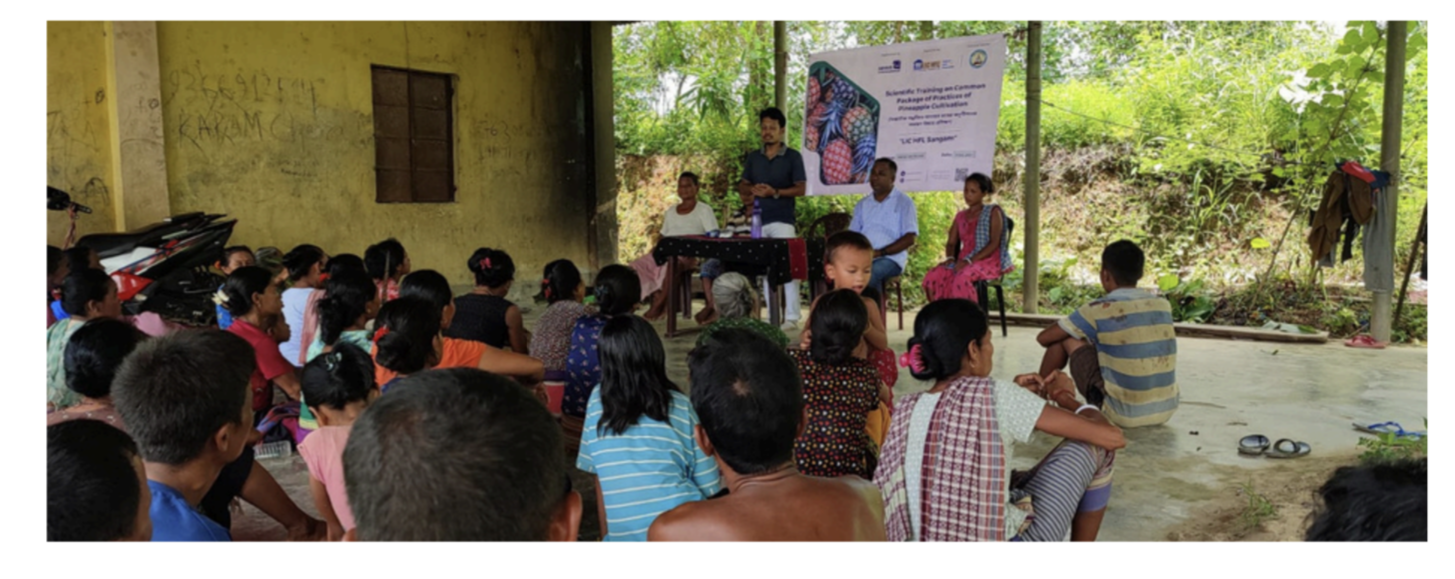
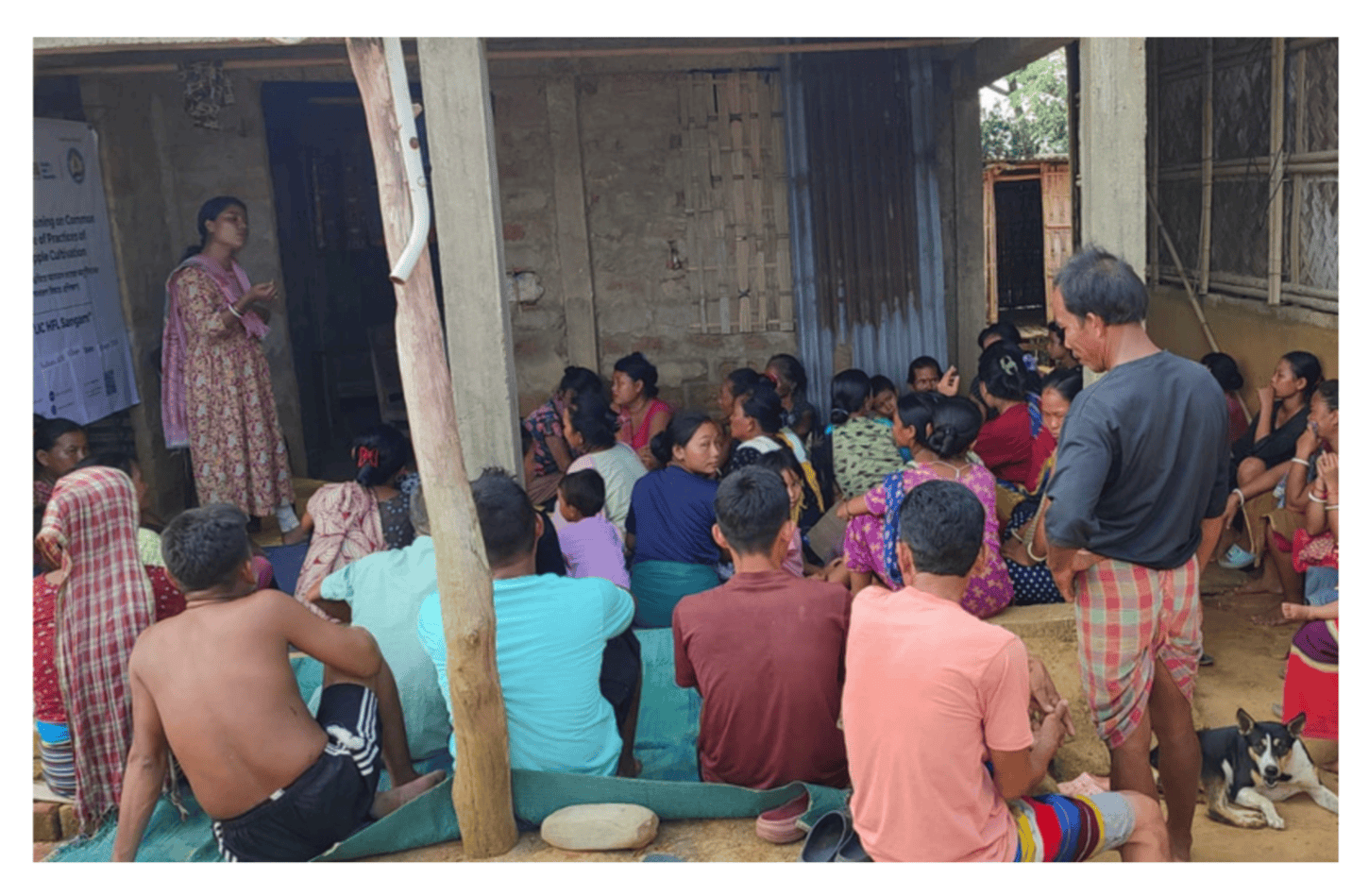
Farmers receive practical training across eight areas of modern agriculture.
- Scientific pineapple cultivation
- Soil health management
- Integrated nutrient management
- Pest and disease management
- Climate-smart agriculture
- Water conservation
- Farm planning
- Post-harvest management
These trainings equip farmers with modern agricultural techniques that improve both productivity and sustainability.
Farmer Producer Groups
Strong communities create stronger livelihoods.
The program supports the formation and strengthening of Farmer Producer Groups to encourage:
Collective decision-making
Shared learning
Better bargaining power
Collective procurement
Group marketing
Financial management
Leadership development
These groups become long-term community institutions capable of managing agricultural activities independently.
Value Addition
Selling raw produce often limits farmers’ income.
Value-added products promoted by the program
- Pineapple Jam
- Pineapple Jelly
- Pineapple Pickle
- Processed Pineapple Products
Training in food processing, branding, packaging, and quality standards enables farmers to access higher-value markets and diversify their income sources.
Market Linkages
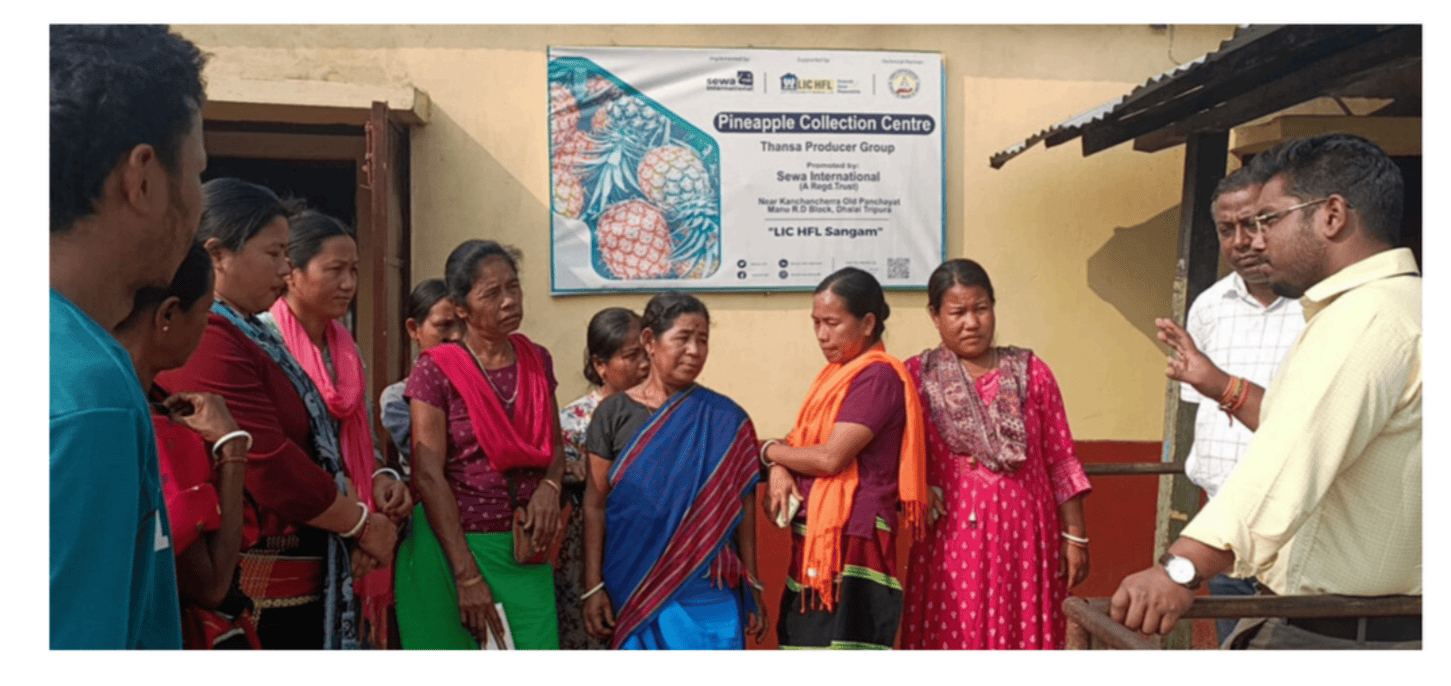
Women Empowerment
Women play a vital role in agriculture and rural livelihoods.
The Pineapple Cultivation Livelihood Program actively encourages women’s participation by providing:
- Agricultural skill development
- Leadership opportunities
- Entrepreneurship training
- Financial literacy
- Participation in Producer Groups
- Decision-making roles
The initiative empowers women to become active contributors to household income and community development while strengthening gender equality.
Sustainability
The program is designed to create lasting impact through community ownership.
Our sustainability strategy
Community-managed Farmer Producer Groups
Collection and Processing Centre
Institutional linkages with Krishi Vigyan Kendra (KVK)
Government convergence
Leadership development
Continuous mentoring
Phased community ownership
These measures ensure that the benefits of the program continue long after project completion.
Partnership & Collaboration
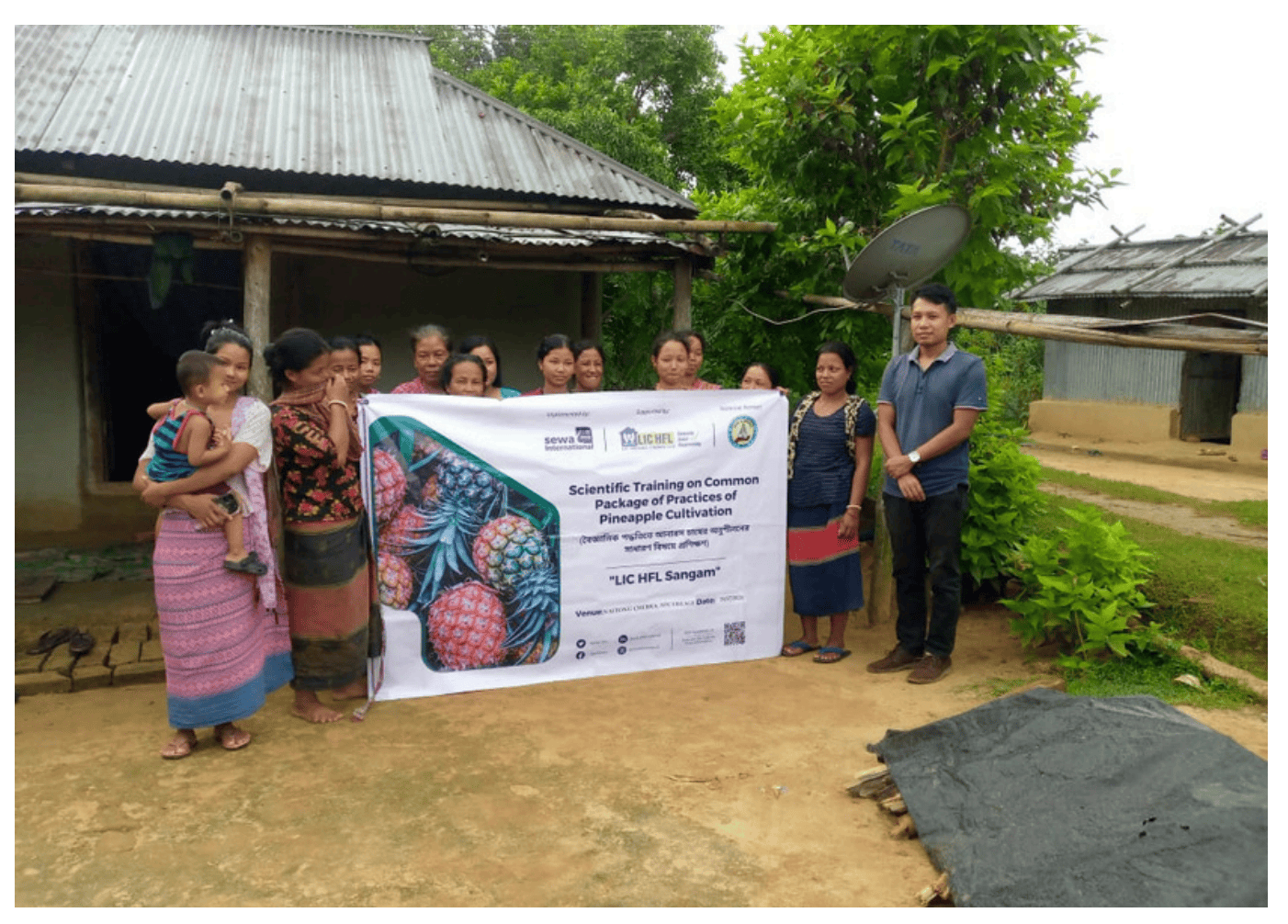
The success of the program is driven by strong partnerships between Sewa International, technical institutions, government agencies, and local communities.
Collaboration with Krishi Vigyan Kendra (KVK), Dhalai has strengthened the program by providing scientific expertise, agricultural best practices, and technical guidance to beneficiary farmers.
Contribution to the Sustainable Development Goals (SDGs)
The Pineapple Cultivation Livelihood Program contributes to several United Nations Sustainable Development Goals.
- 1No Poverty
- 2Zero Hunger
- 5Gender Equality
- 8Decent Work and Economic Growth
- 12Responsible Consumption and Production
Through sustainable agriculture, women’s empowerment, value addition, and livelihood enhancement, the program creates long-term social, economic, and environmental impact.
Impact Beyond Agriculture
The program creates meaningful change well beyond the farm.
- Increasing household incomes
- Improving agricultural productivity
- Reducing post-harvest losses
- Promoting women-led leadership
- Strengthening community institutions
- Creating local entrepreneurship
- Improving food security
- Encouraging sustainable farming practices
- Building resilient rural communities
Success Stories
Behind every successful harvest is a story of determination and hope.
Through this program, farmers have
- Increased their agricultural income
- Become community leaders
- Started value-added enterprises
- Accessed better markets
- Improved their families’ quality of life
- Inspired other farmers to adopt sustainable practices
These stories demonstrate how knowledge, collaboration, and opportunity can transform livelihoods.